

Last Updated: November 9, 2026
Quick Summary
Clean epoxy resin plates with mild soapy water and a lint-free microfiber cloth, dabbing sticky residue with isopropyl alcohol applied sparingly. For cured resin, soften it with a warm damp cloth and lift it with a plastic scraper held almost flat, never a metal blade.
- Rinse loose grit away first, then wipe with a lint-free microfiber cloth and warm soapy water.
- Skip scrub sponges and abrasives, because grit trapped in a cloth is what marks the surface.
- Soften cured resin with a warm damp cloth, then lift it with a plastic scraper held almost flat.
- Avoid metal blades and acetone on cured or hardened resin.
- Dry the plate fully and check the edges; if resin has lifted or cracked beyond a small patch, replacement is safer.
Table of Contents
- Step 1: Identify the Resin State and Plate Surface
- Step 2: Use Safe Cleaners for Epoxy Resin and a Soft Cloth
- Step 3: Learn How to Clean Number Plates Without Scratches
- Frequently Asked Questions
Step 1: Identify the Resin State and Plate Surface
Before you touch a cloth, work out what you are cleaning. Epoxy resin plates can mean a resin-domed number plate holder, where a raised gel layer sits over a printed design, or a number plate that has picked up spilled or cured epoxy during a repair.
Fresh, uncured resin lifts easily; fully cured resin needs patience, not force.
Step 2: Use Safe Cleaners for Epoxy Resin and a Soft Cloth
Safe cleaners for epoxy resin are mild soapy water, a pH-neutral wash and, for stubborn spots, isopropyl alcohol applied sparingly.
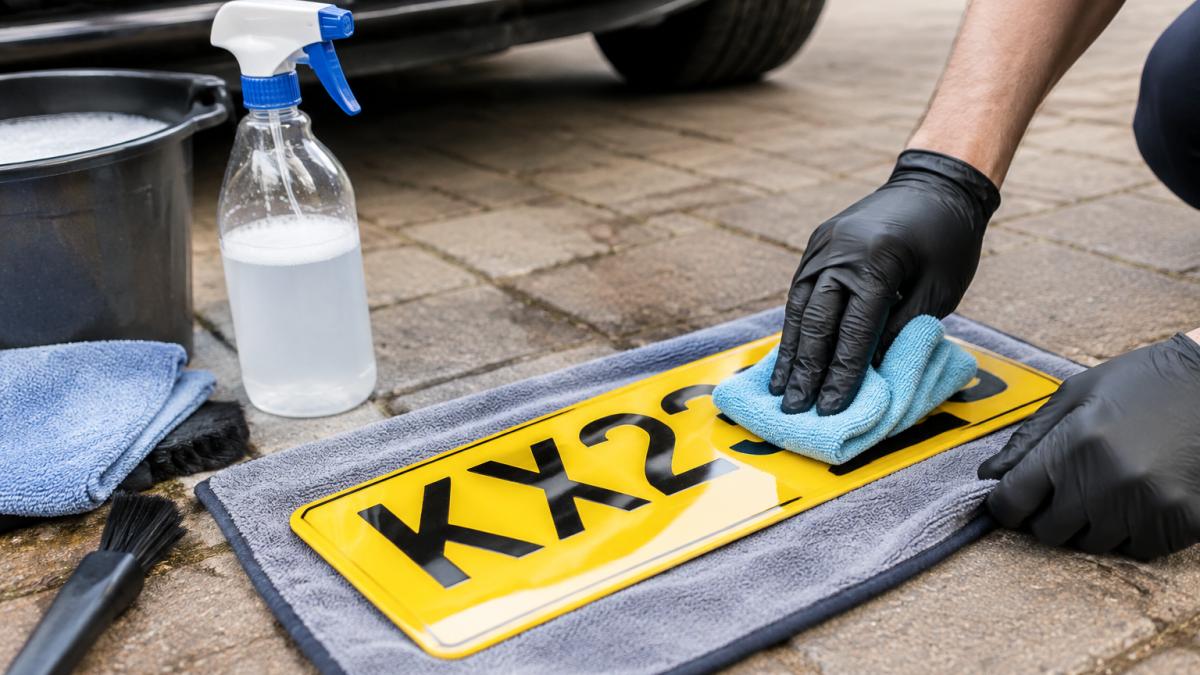
Rinse loose grit away first, wipe with a lint-free microfiber cloth and warm soapy water, dab (don't scrub) sticky residue, then rinse and dry.
Step 3: Learn How to Clean Number Plates Without Scratches
To clean number plates without scratches, use a soft sponge or microfiber cloth, plenty of water and light circular motion. Skip scrub sponges and anything abrasive, because grit trapped in a cloth is what actually marks the surface.
For cured resin that will not shift, soften it with a warm damp cloth, then lift it with a plastic scraper held almost flat. Never use a metal blade.
| Resin state | Method | Avoid |
|---|---|---|
| Liquid or uncured | Dab with a lint-free cloth | Spreading it wider |
| Sticky residue | Isopropyl alcohol on a cloth | Soaking the plate |
| Cured or hardened | Warm compress, then plastic scraper | Metal blades, acetone |
| Everyday grime | Mild soapy water | Scrub sponges |
Once clean, dry fully and check the edges. If the resin has lifted or cracked beyond a small patch, replacement is the safer call. TAPORT's domed plate holders are built to resist weather, temperature and vibration. Health and Safety Executive guidance on safe solvent use
Cleaning resin from a plate is mostly about matching the method to the resin state, and knowing when to stop. TAPORT makes custom number plate holders with UV digital printing and epoxy resin gel doming, so the surface you are caring for is one we understand. Our holders resist weather, temperature and vibration, and swapping plates takes seconds. Get started with TAPORT and keep your plates looking their best.
Frequently Asked Questions
What is the safest cleaner for epoxy resin number plates?
Mild soapy water is the safest everyday option for epoxy resin plates. Mix a few drops of gentle car shampoo or washing-up liquid into warm water, apply with a microfiber cloth and rinse well. For tougher marks, isopropyl alcohol on a cloth works on cured resin, but test a small area first. Avoid acetone, abrasive polishes and strong solvents, which can cloud the dome or soften the protective coating.
Can alcohol or solvent damage an epoxy resin plate?
Isopropyl alcohol is generally safe on fully cured epoxy resin when used briefly and wiped away, but prolonged soaking can dull the gloss. Acetone and paint thinners are far riskier: they can soften the resin, lift the printed design underneath and leave a cloudy finish. Always test a small area first, keep ventilation good, wear protective gloves and never scrub hard with solvent on a resin-domed plate.
Can you polish scratches out of epoxy resin?
Light surface scratches in the clear dome can sometimes be reduced with a fine plastic polish applied in a circular motion with a soft cloth, then buffed clean. Deeper scratches that reach the printed layer usually cannot be polished out without clouding the design. If the scratch is deep or the resin has yellowed, replacing the plate holder is the more reliable option than repeated abrasive polishing.
